PRESS
For magazines, journalists and creators.
THE GAFFER is a retro football management game. Take a club at the bottom of the Football League in August 1959 and manage it for thirty real seasons, to May 1989: pick the side, take the meetings, face the man from the paper and the man on the radio, and keep the board, the fans and the town on your side. Everyone you meet remembers what you said and did. Made by Pitchwork Studios, a small studio in Cardiff, Wales; lead developer Sanwar Ahmed.
Everything you need is below: the press sheet (the game in a paragraph, what is in it, screenshots and the links), and a press kit with the key art and six screenshots to use with your story.
PRESS RELEASE
For release: Monday 19 October 2026
THE MEN WHO REALLY RUN THE CLUB: THE GAFFER’S NIGHT OUTSIDE HOOLIGANS MANOR
Cardiff, Wales. Pitchwork Studios has shown new scenes from THE GAFFER, its retro football management game set in English football from 1959 to 1989, ahead of its release on Steam on 30 October for Windows, Mac, Linux and Steam Deck.

Outside the pub. Every town in THE GAFFER has its pub, Hooligans Manor, and in its back room, the Snug, sit the six people who really run the club: the vice-chairman, the sponsor, a local businessman, a councillor, the mayor and the chair of the supporters’ club. On the night a new manager signs his first sponsor, two of them step out on to the pavement and talk about him while the bus ticks over at the stop, its board showing the town’s own centre. The regulars come and go through the front door, a light goes off upstairs, the HM sign swings in the wind. “Then he’ll find out who really runs this club,” says the vice-chairman. Then the two go round the back, and what they decide there, the manager never hears. Who comes out, and what they say, depends on the town, the year and the pair. Inside, the regulars talk about the week: the result, the table, the new signing and the money.


The taxi and the doorstep. When the manager signs a player, the new man arrives by black cab, holdall in hand. The cab rolls past the manager and Derek, the local paper’s man, and pulls up at the club’s door. The cabbie wants his fare, in the money of the day, and the new man tells him to keep the change. Derek has been waiting on the doorstep with his notebook open. Why him, what he cost, who makes way: the manager answers calmly, rallies, or reaches for the hairdryer, and every word goes in the paper. Derek remembers a promise; so does the town.

The town from above. CLUB STATUS shows the club and its town from above, live: the ground with the club’s place in the table, the training pitch with the squad’s fitness, the board’s confidence over the club offices, the money at the bank, the mood of the regulars at the pub and the town’s belief at the town hall. Buses stop for their passengers, there is a queue at the chippy, and the lads have a kickabout on the rec.
Rooms that change with the decades. The game runs for thirty years, and so do its rooms. The club office where the board reads the books has its pennants from old friendlies stirring when the door goes, a trophy cabinet that fills as the honours come, a better rug at the chairman’s end, the post sack, the mop and bucket, and dust turning in the window light. The scout’s office in the transfer market, the local radio studio and Hooligans Manor are all dressed for their decade, from the late fifties to the eighties: the wallpaper, the furniture, the colours, the machines. In the studio the tape reels turn and the level needles jump while anyone is talking.
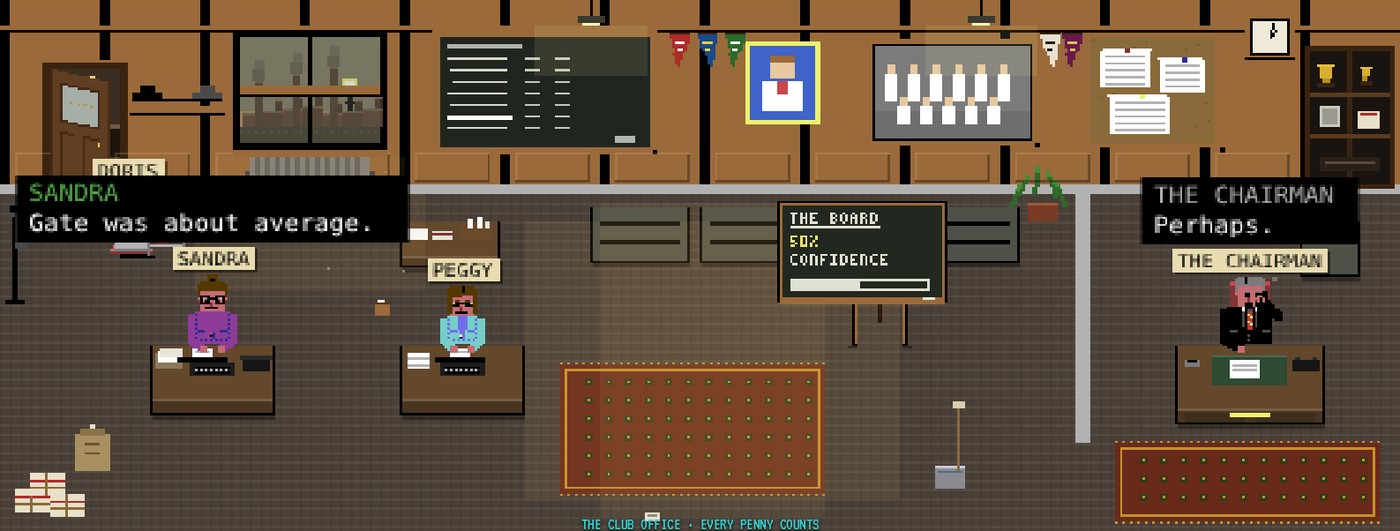
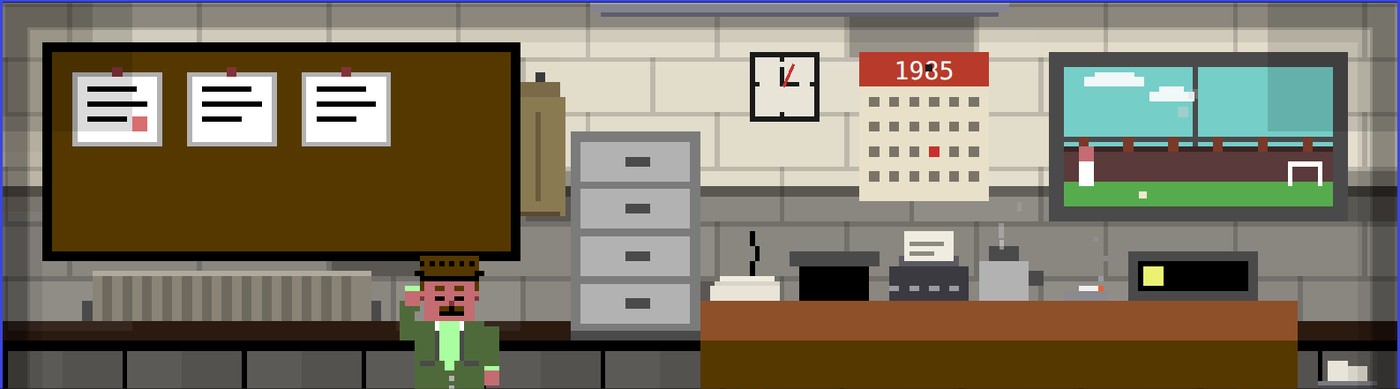
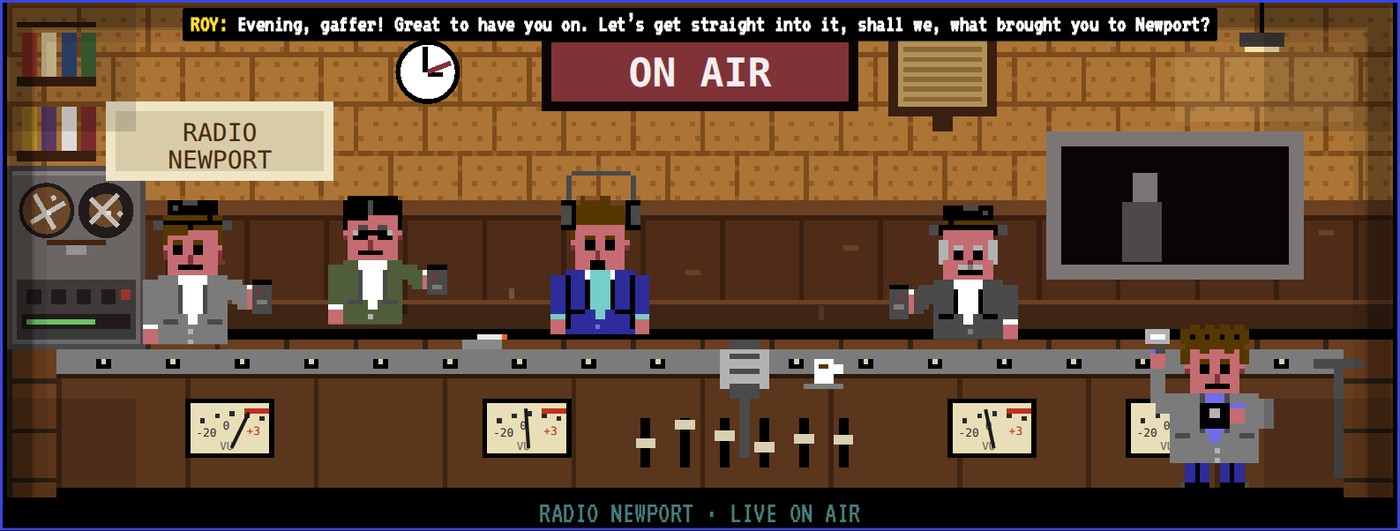
About THE GAFFER. The player takes over a club at the bottom of the Football League in August 1959 and manages it for thirty real seasons, to May 1989: picking the side, taking the meetings, facing the press and local radio, and keeping the board, the fans and the town on side. Everyone the manager meets remembers what he said and did. The game is drawn in pixel art in the style of the 1980s home computers. It is the first game from Pitchwork Studios, a small studio in Cardiff, Wales; lead developer Sanwar Ahmed.
Release. 30 October 2026 on Steam, £9.99 / $9.99, for Windows, Mac, Linux and Steam Deck. The game is in English. Steam: store.steampowered.com/app/5088390
Contact. Pitchwork Studios, support@pitchworkstudios.com. The pictures above are free to use in coverage of the game.


THE PRESS KIT
One zip: the key art (THE GAFFER logo over the ground, in two sizes), six screenshots from the game as it runs (the replay, Hooligans Manor, the kickabout, the hub, club status and the taxi), the press sheet and the facts as text. Free to use in coverage of the game.
ZIP · key art, 6 screenshots, press sheet, facts
THE FACTS
- TITLE
- THE GAFFER
- DEVELOPER
- Pitchwork Studios Ltd, Cardiff, Wales
- LEAD DEVELOPER
- Sanwar Ahmed
- RELEASE
- 30 October 2026, on Steam
- PRICE
- £9.99 · $9.99
- PLATFORMS
- Windows, Mac, Linux and Steam Deck
- CONTROLS
- Mouse and keyboard. Controller support is coming in a future update.
- GENRE
- Football management
- PLAYERS
- Single-player
- LANGUAGE
- English
- SET IN
- English football, 1959–1989: thirty seasons
- STEAM
- store.steampowered.com/app/5088390
- TRAILER
- On the front page and on the Steam page
GET IN TOUCH
For interviews, questions or anything else for your story, write to support@pitchworkstudios.com, or use the contact form, with the name of your magazine, site or channel.
A NOTE ON WHAT THIS GAME IS
THE GAFFER is a work of fiction. It uses real English and Welsh town names as place names only; no real club, badge or person is represented. Its two cups are invented: the Challenge Trophy and the Autumn Cup. Every line of dialogue is written for the game and chosen in play by its own Internal Intelligence system, and every consequence in the game is decided by the simulation. The full notice is in the game, under SETTINGS > ABOUT & DISCLAIMERS.